
The client saw absolutely no traffic loss over the course of their migration (1-2 months) | 3 years post-migration, the client saw a sustained 33% boost to their SEO clicks/visits. |
Within 60 days after migration, they saw a 39% increase in impressions and 50% growth in SEO clicks. | |
Client Background: DIY Craft Design Brand
Our client, an online brand, was seeking to undergo an ambitious website migration (5 websites at stake), and it was vital that the SEO success of their previous pages was to be maintained on their new domains.
- “old-brand-site.com”
- “brand1.com”
- “brand2.com”
- “brand3.com”
- “brand4.com”
Headed by their Vice President of eCommerce, the client partnered with us to lead and oversee their site migration, ensuring a smooth transition from their old website to their new platform.
Their goal was to establish a more effective ecommerce store through a website migration (5 existing websites/domains) completed without losing SEO traffic (and hopefully gaining some if possible), and Why Stuff Sucks had the depth of experience with larger sites like this to make it happen.
The Challenge: Didn’t Want to Lose SEO Traffic Post Migration
The largest risk of a website migration is a loss in search rankings, which for an ecommerce website can directly translate into a loss of revenue. Domain Authority (quantity and quality of external links) is bound to the URL of any given page, so altering the page’s URL by transferring its content to a new website risks erasing the reputation and ranking that page had built.
There were 20,000+ pages so this was a high stakes migration that couldn’t risk any misstep. We did a ton of analysis and presented them with 3 options, the latter of which was the ideal scenario for them. They accepted our recommendation and proceeded with the migration in May 2023.
Pruning The Foundation: Content SEO Audit
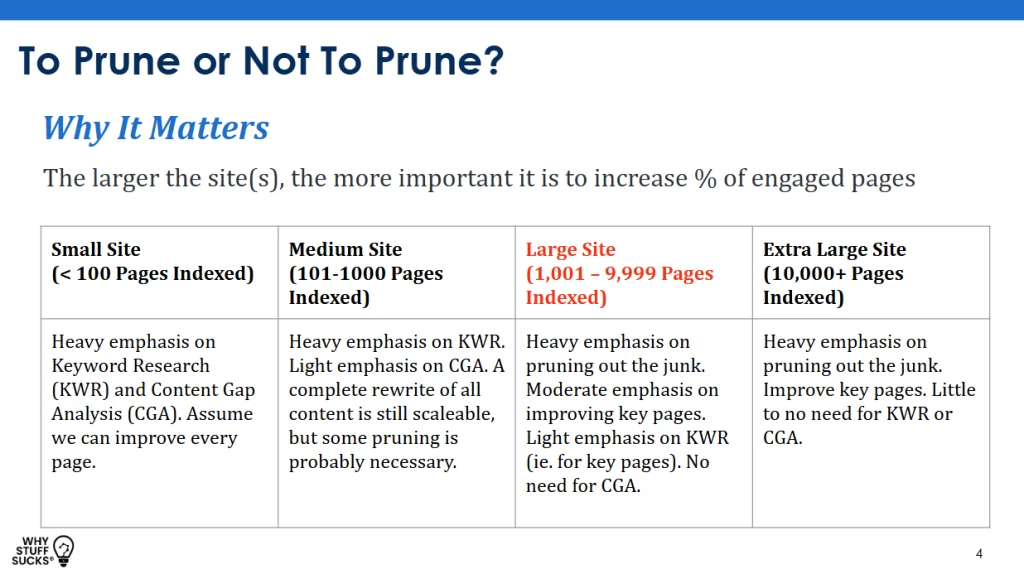
But before we migrated the site, we took a look at the value of their existing site’s pages to see which ones would fall into each of these 3 buckets:
- Kept
- Removed
- Improved
Through an inspection of both domain’s site architecture, we discovered that their site had nearly 7,000 pages and their new site had just over half that at 4,000 pages, many of which were pulling in little to no organic traffic. In anticipation of the site migration, we advised a strategic pruning of pages for both sites.
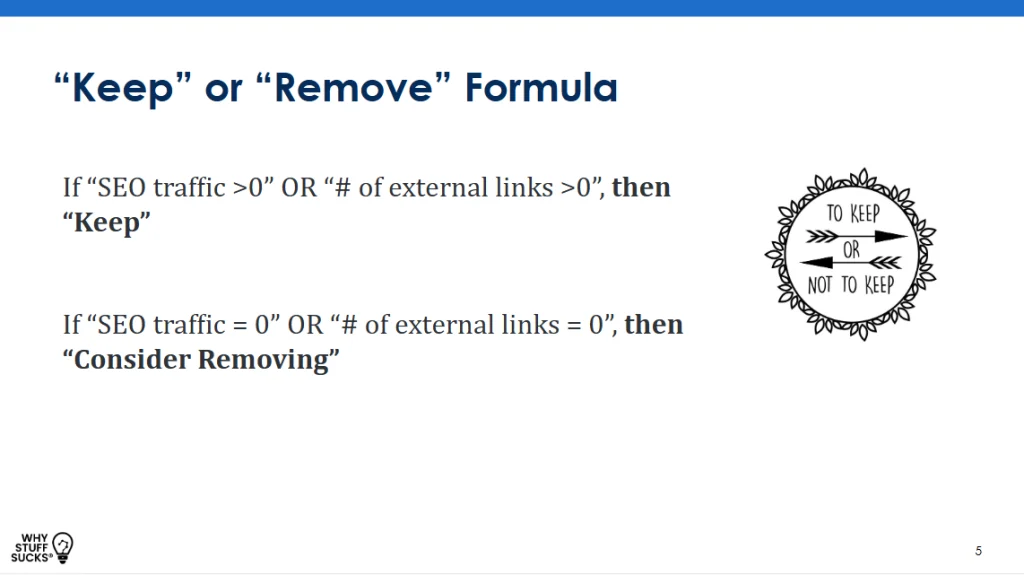
Pages with no traffic or external links whatsoever were recommended to be removed prior to migration:
- 1,066 for their old domain
- 377 for their new one
For the remaining pages, a wave of quick-win tweaks were able to resolve technical errors, fix broken internal links with 301s, and boost their SEO performance in search results.
- 73 keywords were identified for their old domain
- 126 keywords were identified as “within striking distance” of Google’s first page for their new domain.
By overhauling these pages and strengthening their internal linking strategies, Google would likely find the most influential of these pages more easily, making the “kept” pages more likely to gain SEO traffic than pre-migration.
Exploring Migration Strategies: Ok, Good, and Superior
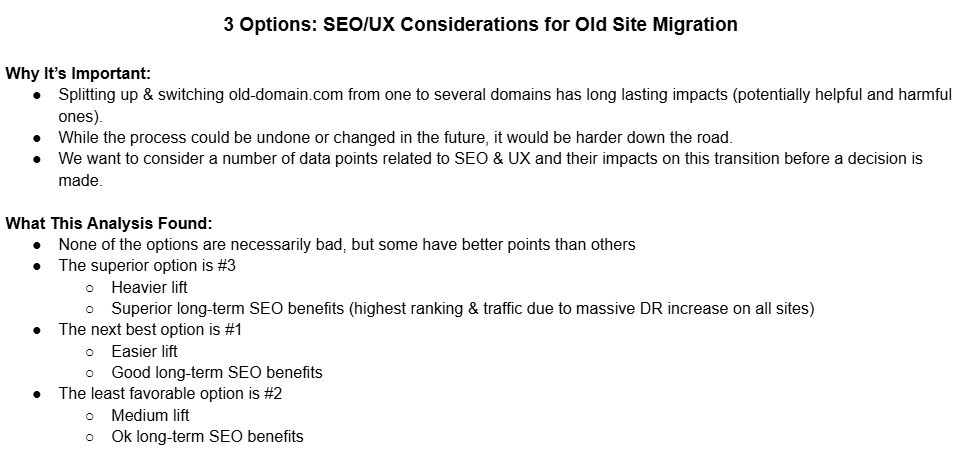
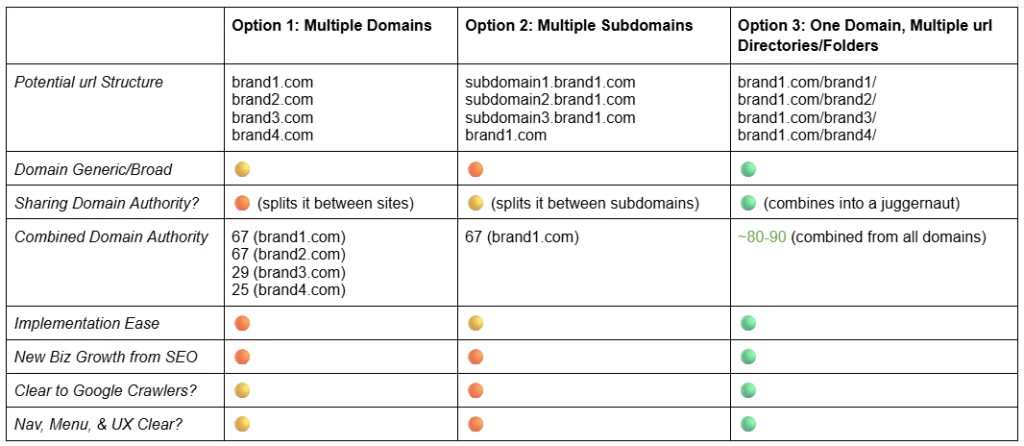
After examining the breadth of content to be transferred in the site migration, we put forth three possible strategies of the site migration:
- Ok: Multiple Domains
The first option was to keep the 4 of the 5 distinct domains for their various brands, which would have not changed much from their current situation. This would’ve kept splitting any search engine success across several sites that Google would never know to equate together (like fighting a multi-front war instead of 1 front).
- Good: Multiple Subdomains
The second option (which is what they thought they wanted) would have been to develop subdomains under a single brand website, which would have walled off the domain authority in each subdomain as Google sees subdomains as separate sites, not 1.
- Superior: Multiple Directories
The third option (we recommended) provided the greatest potential for increased SEO visibility (and clear and simple branding for the customers) by far. By implementing the new pages into 1 website segmented into category pages defined by their different brands, their website would be structured in the exact manner that Google’s crawlers scan, allowing their site to be quickly and effectively analyzed, allowing their topical and domain authority to be amplified by their breadth of work, rather than split between it.
The Results: No Loss + Growth in SEO Post Migration
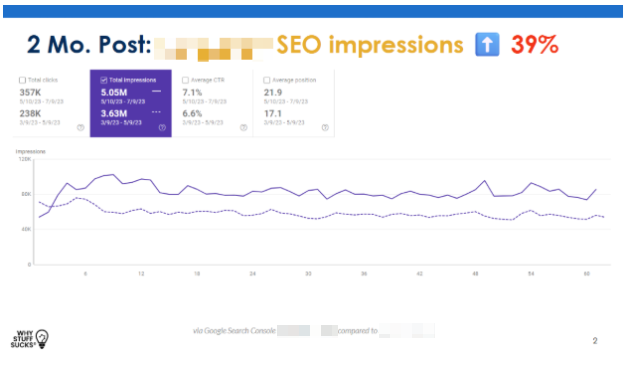
Within 60 days of migrating, they saw a 39% increase in impressions and 50% growth in SEO clicks.
- 3.63 Million to 5.05 Million Impressions
- 238,000 to 357,000 Clicks
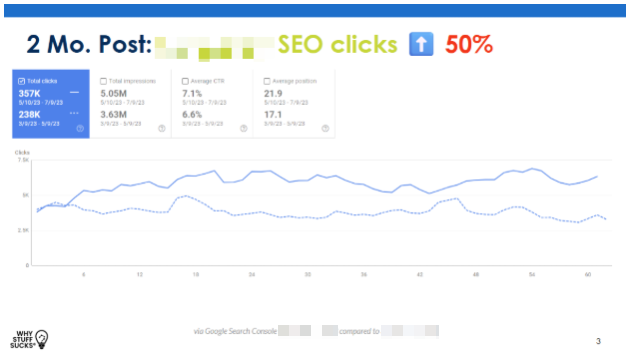
In the wake of the migration process, not only was no traffic lost but Why Stuff Sucks also enabled a boost to organic traffic and keyword rankings.
3 years post launch, they saw their clicks continue to increase by 33%, demonstrating the staying power of our migration strategy through many Google algorithmic updates.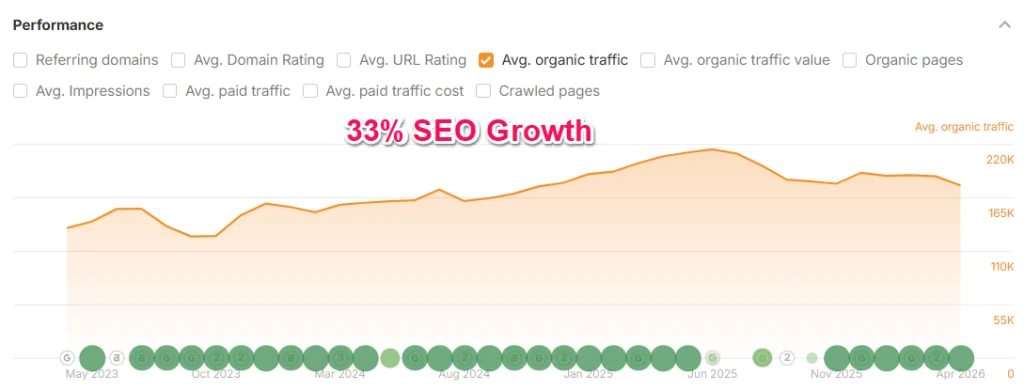
Glowing Reviews From Clients Who Saw Results Firsthand
We’ve served numerous clients in numerous industries over the years we’ve been in the business, and we’re proud to show how happy clients are with our statistics.
Here’s what our clients have to say about our ability to deliver results: