
B2B ecommerce has crossed a point of no return.
The buyers driving today’s purchasing decisions grew up with Amazon, expect real-time inventory data, and have zero patience for a procurement process that requires three phone calls and a fax. Digital commerce has moved from a competitive advantage to the cost of entry, and the companies treating it as optional are watching their market share quietly migrate to competitors who figured that out two years ago.
The B2B ecommerce market hit $2.297 trillion in 2024 and is projected to reach $3 trillion by 2028. That growth reflects a fundamental shift in how business buyers research, evaluate, and purchase, not a temporary trend. Understanding what’s driving that shift, and which ecommerce trends deserve your immediate attention, is what separates the companies building for the next decade from the ones defending the last one.
6 Reasons B2B Ecommerce Growth Is Accelerating (& Why Your Business Can’t Afford to Sit Out)
The numbers don’t lie, but they don’t tell the whole story either. Behind the market projections are specific, identifiable forces that have permanently changed what business buyers expect from their suppliers. These six reasons explain why the digital transformation of B2B commerce is accelerating, and why waiting to adapt is no longer a neutral decision:
- Millennial buyers now control the majority of B2B purchasing decisions
Millennials represent 73% of B2B buyers today, and they bring consumer-grade expectations directly into the procurement process. They default to digital channels, expect self-service options, and will choose a competitor’s platform over yours if yours creates friction they don’t have to tolerate.
- Digital channels have permanently replaced the traditional sales rep cold call
Research from Forrester shows that 89% of B2B buyers begin their purchase journey with a search engine, not a vendor conversation. By the time a buyer contacts your sales team, they’ve already formed a strong opinion based entirely on what your digital presence communicated, or failed to.
- B2B ecommerce market size is on track to hit $3 trillion in the US alone
That projection isn’t just a headline stat; it represents the volume of purchasing decisions migrating away from offline channels toward digital commerce platforms. The companies capturing that spend are the ones who built the infrastructure to serve buyers where they actually buy.
- Self-service purchasing is no longer a perk, it’s a baseline expectation
Gartner reports that 83% of B2B buyers prefer digital channels for placing orders and making payments. Buyers don’t want to call a sales rep to check inventory, request a quote, or reorder a product they’ve purchased a dozen times. The ecommerce platforms that enable self-service are winning accounts that phone-first companies are losing without knowing why.
- Supply chain disruptions accelerated digital transformation across every industry
The supply chain failures of the past several years exposed the fragility of analog procurement systems and pushed companies toward digital solutions built for visibility, speed, and resilience. That acceleration didn’t reverse when supply chains stabilized. It permanently raised the operational standard for what a modern B2B ecommerce strategy needs to deliver.
- Amazon Business proved that B2B buyers want consumer-grade convenience
Amazon Business crossed $35 billion in annual sales because it gave business buyers the same frictionless experience they expected as consumers, fast search, transparent pricing, multiple payment methods, and reliable fulfillment. Every B2B company now competes against that experience, regardless of whether they sell on the platform.
The Fundamental Divide Between B2C & B2B Ecommerce (& How To Build For Business)
The biggest mistake B2B companies make when building their ecommerce strategy is borrowing the B2C playbook wholesale. The mechanics of digital commerce look similar on the surface, product pages, checkout flows, order management, but the context underneath is completely different. B2C optimizes for impulse and convenience. B2B optimizes for accuracy, compliance, and long-term account relationships.
The table below maps the core differences between B2C and B2B ecommerce across every dimension that matters to platform strategy, buying experience, and operational execution:
|
B2C (Consumer) Ecommerce |
B2B (Business) Ecommerce |
|
|
Buyer |
Individual consumer |
Procurement team, buying committee, or business owner |
|
Decision-making process |
Single decision-maker, often impulse-driven |
Multiple stakeholders, longer evaluation cycle |
|
Average order value |
Low to moderate |
High, often with volume-based pricing |
|
Purchase frequency |
Irregular, browsing-driven |
Recurring, often contract or subscription-based |
|
Pricing structure |
Fixed, publicly visible |
Account-specific, tiered, or negotiated contract rates |
|
Payment methods |
Credit card, digital wallet |
Purchase orders, invoicing, net terms, wire transfer |
|
Checkout complexity |
Simple, optimized for speed |
Multi-step, may require approvals or quote requests |
|
Customer relationship |
Transactional, brand loyalty through experience |
Long-term, relationship & account management driven |
|
Product discovery |
Browsing, ads, social media |
Sales rep, marketplace, search, self-service portal |
|
Content needs |
Short, visual, emotionally driven |
Technical specs, detailed documentation, use cases |
|
Personalization |
Behavioral & demographic |
Account-based, contract-based, purchase history |
|
Customer service |
Post-purchase support |
Ongoing account management & dedicated support |
|
Platform requirements |
Speed, UX, conversion optimization |
ERP & CRM integration, custom pricing, bulk ordering |
10 B2B Ecommerce Trends Your Sales Teams & Platform Can’t Keep Ignoring

The B2B ecommerce landscape is shifting fast, and not every trend deserves equal attention. The ten below have moved past the hype stage and into active deployment at companies gaining real competitive ground. Evaluate each against your current platform capabilities and your buyers’ expectations, the gap between those two things is exactly where revenue is leaking.
- AI-powered personalization at the account level
Artificial intelligence now enables B2B ecommerce platforms to deliver tailored product recommendations, dynamic content, and account-specific pricing automatically at scale. This moves personalization from a manual sales rep function to an automated digital experience that runs across every buyer touchpoint simultaneously.
- Headless commerce architecture replacing rigid legacy platforms
Headless commerce decouples the frontend buyer experience from the backend commerce engine, giving B2B companies the flexibility to build and iterate without touching core platform infrastructure. Companies still running monolithic legacy systems are watching their ability to adapt shrink with every passing quarter.
- Dynamic pricing driven by real-time customer data
Dynamic pricing uses customer data, purchase history, order volume, account tier, and market conditions, to automatically display the right price to the right buyer at the right time. Static pricing models leave money on the table and create friction for buyers who expect their contract rates to appear without manual intervention.
- Third-party marketplace expansion beyond your own ecommerce site
Platforms like Amazon Business and Alibaba are where B2B buyers increasingly begin product discovery, and companies without a marketplace presence are invisible at the top of the funnel. A deliberate third-party marketplace strategy expands reach, accelerates new customer acquisition, and tests demand without the overhead of building new direct channels from scratch.
- Predictive analytics for demand forecasting & inventory management
Machine learning algorithms analyze historical data, seasonal patterns, and market signals to forecast demand with an accuracy that manual planning can’t match. B2B companies using predictive analytics to drive inventory management reduce stockouts, cut carrying costs, and fulfill orders faster, all of which directly impact customer satisfaction and repeat purchases.
- Omnichannel selling across preferred channels
B2B buyers don’t interact with suppliers through a single channel, they research on social media platforms, compare on marketplaces, reorder through mobile apps, and escalate complex issues to sales reps. An omnichannel ecommerce strategy ensures that every one of those touchpoints delivers consistent product data, pricing, and brand experience.
- Self-service portals reducing dependence on sales reps for routine orders
Self-service portals let buyers handle the entire ordering process, from account management to quote requests to repeat purchases, without requiring sales rep involvement. This frees your sales teams to focus entirely on high-value relationship development and complex deal negotiation rather than order entry.
- Composable architecture for faster platform flexibility
Composable architecture builds B2B ecommerce platforms from independent, API-connected components that can be updated, replaced, or scaled individually. Companies adopting composable architecture can deploy new features, integrate back office systems, and respond to shifting buyer expectations at a speed that outdated legacy platforms structurally cannot match.
- Data governance as a competitive differentiator
Clean, accurate, centralized customer data is the foundation of every personalization, pricing, and forecasting capability on this list, and most B2B companies are operating with fragmented, inconsistent data spread across multiple systems. B2B companies that invest in data governance don’t just improve operational efficiency; they build the infrastructure that makes every other digital initiative more effective.
- Subscription & recurring order models for loyal customers
Subscription and recurring order functionality converts one-time buyers into predictable revenue streams by automating the reordering process for products buyers purchase regularly. This model increases purchase frequency, deepens customer loyalty, and creates the kind of sticky account relationships that are significantly harder for competitors to disrupt.
Stop Letting Competitors Win the Customers Your Ecommerce Strategy Should Already Have
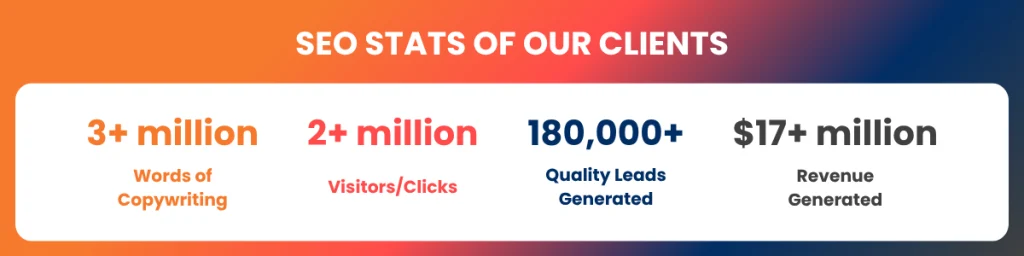
The B2B ecommerce trends above aren’t future-state projections, they’re the operational reality at companies already pulling market share from suppliers who haven’t updated their digital strategy. Every month your platform falls short of buyer expectations is a month your competitors gain ground that gets harder to recover.
We work directly with B2B companies to:
- Audit their current ecommerce capabilities
- Identify where buyer experience is breaking down
- Build strategies that turn digital commerce into a genuine growth engine
Reach out now and let’s build the ecommerce strategy your buyers are already expecting.


How Artificial Intelligence Is Rewriting the Rules of B2B Ecommerce From the Ground Up

Artificial intelligence has moved from a marketing buzzword into the operational core of competitive B2B ecommerce platforms. Machine learning now powers demand forecasting that outperforms human planning, personalization engines that serve tailored experiences to thousands of accounts simultaneously, and dynamic pricing systems that respond to market conditions in real time.
The most immediate AI application reshaping the B2B buying process is agentic commerce; AI-powered systems that allow buyers to browse for products and complete purchases entirely through conversational interfaces without human sales involvement. For B2B companies with large longtail customer bases that historically received minimal sales rep attention, this represents an entirely new revenue channel.
AI is also transforming back office systems. Fraud detection, inventory optimization, automated customer service, and predictive analytics are all running on machine learning infrastructure at companies that have made the investment.
The gap between B2B ecommerce platforms running AI and those that haven’t isn’t closing, it’s widening. B2B companies that treat AI integration as a future initiative rather than a current operational priority are making a decision that will be expensive to reverse.
7 Ways Self-Service Portals Are Flipping the B2B Buying Process on Its Head
B2B buyers have made their preference clear: they want to handle as much of the purchasing process as possible without involving a sales rep. Self-service portals are the ecommerce infrastructure that makes that possible, and companies that haven’t built them are creating unnecessary friction at exactly the moments buyers are most ready to transact:
- Buyers can research, configure & reorder without contacting a sales rep
Self-service portals put the entire buying process in the buyer’s hands, product discovery, configuration, pricing review, and order placement all happen without a single sales touchpoint. For buyers who already know what they want, removing that friction is the difference between a completed order and an abandoned session.
- Account-specific pricing visible at login
When a buyer logs into a self-service portal and immediately sees their negotiated contract rates and volume discounts, it eliminates one of the most common B2B friction points. Pricing transparency at the account level builds customer trust and removes the back-and-forth that historically delayed order placement.
- Order history & repeat purchase tools that reduce friction
Access to complete purchase history and one-click reorder functionality dramatically reduces the time investment for routine procurement. Buyers managing high purchase frequency don’t want to rebuild orders from scratch, they want a self-service experience that remembers what they buy and makes reordering effortless.
- Real-time inventory visibility without a phone call
Self-service portals connected to live inventory management systems show buyers exactly what’s available, what’s backordered, and what the lead times are before they place an order. Up-to-date information at the product level eliminates a category of customer service inquiry that consumes sales rep time without advancing any relationship.
- Quote requests submitted & tracked without email back-and-forth
Digital quote request workflows built into self-service portals let buyers submit requests, track status, and approve quotes entirely within the platform. Removing email from the quoting process reduces cycle time, eliminates version confusion, and gives both parties a documented record of every interaction.
- 24/7 access removes the business-hours bottleneck
Business buyers don’t restrict their procurement activity to business hours, and a self-service portal that operates around the clock captures orders that would otherwise wait until the next morning. For B2B companies serving customers across multiple time zones, 24/7 digital access is an operational necessity, not a convenience feature.
- Frees sales teams to focus on high-value relationships
When self-service portals handle routine ordering, reorders, and basic account management, sales teams are liberated to spend their time where human relationships genuinely matter. Strategic accounts, complex negotiations, and new customer development all benefit when sales reps aren’t spending half their day on order entry and inventory inquiries.
Why Mobile Usage Is the New Storefront for B2B Ecommerce in a Post-Desktop World

Mobile devices have become the primary research tool for B2B buyers, and the ecommerce platforms that haven’t optimized for that reality are losing credibility before a buyer reads a single product description. Mobile optimization isn’t a UX enhancement; it’s a search ranking factor, a trust signal, and a direct input into whether your B2B ecommerce site even makes the evaluation shortlist.
- Over 60% of B2B buyers use mobile devices for product research
The majority of B2B product research now happens on smartphones and tablets before buyers ever interact with a desktop environment. A mobile experience that feels clunky, slow, or incomplete during that research phase communicates that your digital commerce operation wasn’t built with your buyers in mind.
- Mobile-first indexing means your search rankings depend on your mobile experience
Google determines search rankings based on the mobile version of your ecommerce site, not the desktop version. A B2B ecommerce platform that performs well on desktop but delivers a degraded mobile experience is actively suppressing its own organic search visibility.
- Millennial & Gen Z buyers expect the same mobile UX they get as consumers
The buyers making today’s B2B purchasing decisions judge your mobile ecommerce experience against Amazon, not against your industry average. Consumer-grade mobile UX has become the benchmark, and an ecommerce site that falls short of it signals that the company isn’t invested in the digital experience its buyers actually use.
- Custom mobile apps enable barcode scanning, reordering & account management on the go
Purpose-built mobile apps extend B2B ecommerce functionality beyond a responsive website, barcode scanning for inventory replenishment, push notifications for order status, and one-tap reordering all create purchasing efficiency that mobile browsers can’t replicate. For buyers managing high-volume or high-frequency procurement, a purpose-built app is a loyalty driver.
- Poor mobile optimization is an early trust killer in the buying process
A B2B ecommerce site that breaks on mobile, loads slowly, or buries key information below the fold creates an immediate credibility problem for a buyer evaluating multiple suppliers. First impressions on mobile happen in under three seconds, and a negative one sends buyers directly to a competitor whose digital experience communicates that they’ve actually invested in serving their customers.
B2B Ecommerce Trends FAQs: Straight Answers to the Questions Decision-Makers Actually Ask
These are the questions B2B decision-makers are asking before they commit to a platform, a strategy, or a technology investment, and most of them aren’t getting straight answers. Here’s what you actually need to know.
- How is B2B ecommerce different from traditional B2B sales?
Traditional B2B sales relies on sales rep relationships, phone-based ordering, and manual quote processes to move buyers through the purchasing cycle. B2B ecommerce shifts that entire workflow to digital channels, giving buyers self-service access to pricing, inventory, order history, and account management without requiring human sales involvement for routine transactions. The sales team doesn’t disappear in a digital commerce model; their role shifts toward high-value account development and complex deal management.
- What payment methods should a B2B ecommerce platform support?
A B2B ecommerce platform needs to support the full range of business payment methods, purchase orders, net terms, ACH transfers, wire payments, credit lines, and corporate credit cards at minimum. The payment methods available on a consumer ecommerce site represent a fraction of what B2B buyers require, and a platform that only supports credit card checkout will create compliance and cash flow problems for buyers operating within corporate procurement structures.
- How do you handle complex pricing structures like volume discounts & contract rates online?
Modern B2B ecommerce platforms handle complex pricing through account-based pricing rules that display the correct rates automatically when a buyer logs in. Volume discounts, tiered pricing, customer-specific contract rates, and promotional pricing can all be configured at the account or customer group level, so the buyer always sees accurate pricing without contacting a sales rep or waiting for a manual quote.
- What’s the ROI timeline for investing in a modern B2B ecommerce platform?
ROI timelines vary based on platform complexity, integration scope, and the current state of your digital commerce infrastructure, but most B2B companies begin seeing meaningful efficiency gains within six to twelve months of a well-executed implementation. The longer-term compounding value, reduced sales rep time on routine orders, increased order frequency through self-service, and expanded reach through digital channels, typically produces its most significant revenue impact in year two and beyond.
- How do third-party marketplaces like Amazon Business fit into a B2B ecommerce strategy?
Third-party marketplaces function as top-of-funnel discovery channels that expose your products to buyers who may never find your direct ecommerce site through organic search. A deliberate marketplace strategy supplements your owned digital commerce presence rather than replacing it, using platforms like Amazon Business to capture new customer attention while driving repeat purchases and account management back to your own ecommerce platform where you control the experience and the data.
- How do you maintain personalized customer relationships at scale in digital commerce?
Personalization at scale in B2B ecommerce runs on customer data, purchase history, browsing behavior, account tier, and industry, fed into AI-powered recommendation and dynamic pricing engines. The self-service portal becomes the relationship delivery mechanism, surfacing relevant products, contract pricing, and tailored content automatically for each buyer without requiring sales rep involvement in every interaction.
- When does a B2B company actually need to replatform vs. optimize what it has?
Optimization makes sense when your current ecommerce platform can support the integrations, personalization capabilities, and buyer experience improvements your strategy requires with reasonable effort. Replatforming becomes necessary when the platform’s architecture fundamentally limits what you can build, particularly when legacy systems prevent ERP or CRM integration, block account-level pricing, or make mobile optimization structurally impossible. If your platform roadmap is full of workarounds rather than capabilities, that’s the signal.
- How do you align sales teams with a self-service ecommerce model without creating internal conflict?
The most effective approach redefines the sales team’s role rather than reducing its importance. Self-service portals handle routine reorders, basic account management, and standard quote requests, the tasks that consume sales rep time without requiring relationship skills. Sales teams refocused on strategic account development, new business acquisition, and complex negotiations consistently perform better in a self-service ecommerce environment because they’re no longer buried in administrative work that a digital platform handles more efficiently anyway.
Knowing the B2B Ecommerce Trends Is Step 1. Building a Strategy Around Them Is Where We Come In.

Understanding where B2B ecommerce is headed gives you a map. Actually building the ecommerce strategy, platform infrastructure, and content ecosystem to capitalize on that direction is a different challenge entirely, and it’s one that most B2B companies are navigating without the SEO and digital marketing foundation that makes digital commerce actually generate pipeline.
We work directly with B2B companies to connect the dots between the trends reshaping buyer behavior and the practical ecommerce strategy moves that translate them into revenue. Every engagement is handled personally, no junior account managers, no generic recommendations, and no vanity metrics dressed up as results.
Contact us today to get a direct assessment of where your B2B digital commerce strategy stands and exactly what it would take to build a real competitive advantage around it.