
Enterprise organizations do not have a shortage of data. They have too much of it, scattered across a dozen dashboards, several analytics platforms, and a stack of reports nobody opens twice. Enterprise SEO analytics is not about collecting more numbers, it is about turning organic traffic, keyword rankings, and technical SEO signals into decisions that move revenue.
Most enterprise websites carry thousands of pages, several stakeholders, and a search engine that changes its rules every few months. Without a clear system for enterprise seo analysis, teams end up reacting to ranking drops instead of anticipating them.
This article breaks down how to spot a strategy that has fallen behind, the insights a real enterprise seo analysis should uncover, and the expertise it takes to turn that data into growth.
7 Signs Your Enterprise SEO Strategies Need an Overhaul
Enterprise SEO strategies rarely fail all at once. They erode slowly, showing up as flat traffic and inconsistent rankings long before anyone connects the dots to a bigger problem.
- Your Organic Traffic Has Plateaued Despite More Content
Publishing more blog posts, service pages, and location pages should grow organic traffic over time, not just the size of your content library. When traffic stalls anyway, it usually points to overlapping keywords, thin optimization, or pages that were never built with real keyword research behind them.
- You’re Relying on Spreadsheets Instead of Real Analytics
Spreadsheets can track rankings for a handful of keywords, but they fall apart once a site spans thousands of pages and multiple business units. Real enterprise seo analytics consolidate ranking data, technical SEO issues, and traffic trends into one place so patterns are visible instead of buried in tabs.
- Technical SEO Issues Are Multiplying Across Thousands of Pages
Broken internal links, duplicate content, and crawl errors compound quickly at scale, and a small issue on one template can spread across an entire section of the site. Without ongoing technical SEO monitoring, these issues often go unnoticed until organic traffic has already dropped.
- Your Team Can’t Explain Which Keywords Actually Drive Revenue
Tracking keyword rankings only matters if that data connects to what the business cares about, like leads and sales. If your SEO team can point to rankings but not to which keywords tie back to revenue, the strategy is measuring activity instead of results.
- Rankings Are Inconsistent Across Regions and Business Units
Enterprise organizations often operate across multiple regions, brands, or product lines, and performance in one area does not guarantee performance in another. When rankings vary widely with no clear explanation, it is a sign the strategy was not built to scale across the full organization.
- You Have No Way to Prioritize SEO Fixes at Scale
An enterprise site can generate hundreds of technical SEO issues and content gaps at once, and not every fix carries the same weight. Without a system for prioritizing fixes by potential impact, teams waste time on low-value tasks while the changes that would actually move rankings sit untouched.
- You Are Not Showing Up Enough in AI searches
AI Overviews and other AI-generated answers are changing how often people click through to a website at all, and recent Ahrefs research found that AI Overviews can reduce clickthrough rates to the top-ranking page by as much as 58%. If your enterprise SEO strategy has not adapted to how AI search surfaces and cites content, you are losing ground in a channel that is only going to grow.
5 Key Insights Every Enterprise SEO Analysis Should Uncover

A single audit shows what is broken today, but real enterprise seo analysis uncovers the patterns underneath it. These insights turn scattered analytics into a strategy that protects and grows organic traffic instead of just reporting on it.
- Which Pages Are Losing Visibility and Why
A strong enterprise seo analysis identifies exactly which pages are slipping in traditional rankings and which are losing visibility inside AI-generated answers, since the two do not always move together. The reason behind each drop matters just as much, since a technical SEO issue, a content gap, or a competitor gaining ground each call for a different fix.
- Where Keyword Cannibalization Is Costing You Rankings
When multiple pages on the same enterprise website target the same keyword, they often compete against each other instead of the competition. Enterprise seo analytics can surface these overlaps so teams can consolidate, differentiate, or redirect pages before rankings suffer further.
- How Internal Linking Impacts Crawl Efficiency at Scale
On a site with thousands of pages, internal linking determines which pages search engines crawl often and which pages get buried. A proper analysis of internal linking patterns reveals orphaned pages and weak link equity that are quietly limiting organic traffic.
- Which Content Gaps Are Handing Traffic to Competitors
If competitors rank for keywords your site does not target at all, that gap is direct lost traffic and lost revenue. A thorough enterprise seo analysis maps these gaps against your existing content strategies so new content gets built with intent instead of guesswork.
- How User Experience Signals Are Affecting Search Performance
Search engines increasingly factor in how users interact with a page, including load speed, mobile usability, and how quickly someone leaves after clicking through. Enterprise seo analytics that ignore user experience signals miss a piece of the puzzle that can explain why well-optimized pages still underperform.
Ready to Make Sense of Your SEO Data?
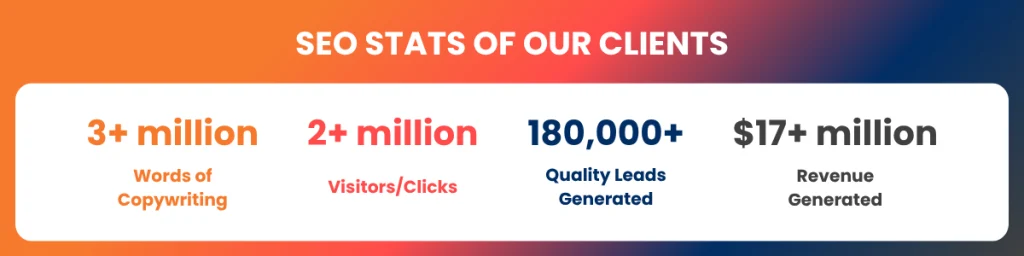
Enterprise SEO analytics only create value when someone actually turns the data into a plan. If your team is buried in dashboards but still unsure what to fix first, that gap between data and action is costing you organic traffic every month.
Why Stuff Sucks® works directly with enterprise organizations to translate SEO data into a strategy built around real business goals. Reach out now to talk through what the stats are actually telling you.


How You Can Build A Feedback Loop Between AEO & SEO
Building a feedback loop between AEO and SEO means letting insights from one channel sharpen the other, instead of treating them as two separate scoreboards. Every AI citation tells you something a traditional ranking report can’t: which specific claims, phrases, or data points an AI model decided were worth quoting. Feed those insights back into your SEO content, and you start writing pages that rank and get cited at the same time.
The reverse works too. Your keyword research, backlink profile, and technical SEO audits build the domain authority AI models look for when picking sources in the first place. Structured data you add for schema purposes also happens to be exactly what AI crawlers scan for entity recognition. Update a page for AEO, and Google often notices the improved clarity and structure on its own.
For another business we own (laceduplaces.com), AI/LLM sessions are trending up 560% over previous YTD for its website.
Track both sides together, watch which pages get cited in AI answers, then check whether those same pages climb in traditional rankings a few weeks later. That pattern, once you spot it, becomes your playbook for every new page you publish going forward.
8 Signature Skills of A Senior-Level SEO Strategist

Enterprise SEO is difficult to execute well, and the strategist leading it makes the difference between steady growth and stalled rankings. These are the skills that separate senior-level expertise from a general marketing background.
- Fluency in Enterprise-Level Analytics Platforms
A senior strategist needs to move comfortably between enterprise-level analytics platforms, from Google Analytics to specialized SEO tools built for tracking thousands of pages. That fluency is what turns raw data into a clear read on seo performance instead of a pile of exportable reports.
- Deep Technical SEO Troubleshooting Ability
Enterprise websites accumulate technical SEO issues that smaller sites rarely encounter, from crawl budget problems to duplicate content across regional subdomains. A strategist with deep technical SEO expertise diagnoses these issues at the root instead of applying surface-level fixes that do not hold.
- Ensuring SEO Data and Metrics Being Tracked Align with Leads/Sales Goals
Tracking rankings and organic traffic only matters if those metrics connect back to leads and sales. A senior strategist builds SEO reporting around the numbers the business actually cares about, not just the numbers that are easiest to pull.
- Sharp Keyword Research and Prioritization Instincts Based on “Who is Likely to Become OUR Customer?”
Keyword research tools can surface thousands of potential keywords, but not all of them lead to the kind of customer your organization actually wants. A strong strategist filters keyword research through the lens of your ideal customer, prioritizing terms that bring in the right traffic over just more traffic.
- Strong Grasp of Content Strategy at Scale (1,000s to Millions of pages)
Content strategies that work on a site with a few hundred pages often break down completely across a site with millions. A senior strategist structures content strategy so it holds up at enterprise scale without duplicating effort or diluting rankings.
- Ability to Translate SEO Data Into Executive-Level Insights
Executives do not need a spreadsheet of keyword rankings, they need to understand what the data means for the business. A senior strategist takes complex analytics and turns them into insight that supports real decisions at the leadership level.
- Experience Managing SEO Across Multiple Teams and Stakeholders
Enterprise SEO initiatives typically touch content, development, design, and leadership, and each group has its own priorities. A strategist with real enterprise experience knows how to keep SEO initiatives moving across all of those teams without losing momentum.
- Translating Site Content into Multiple Languages for Ranking in Countries Other Tan the Home Country
Ranking in international markets requires more than a direct translation of existing pages, since search behavior and keyword research vary by country and language. An experienced strategist accounts for these differences so multilingual content actually ranks instead of just existing.
Why Enterprise Organizations Can’t Afford to Skip SEO

Enterprise organizations already have brand recognition, but visibility in search results does not follow automatically from being a large company. Search engines rank pages, not reputations, and a competitor with a sharper enterprise SEO strategy can out-rank a bigger brand for the exact keywords that matter most.
The cost of skipping SEO at the enterprise level shows up in lost organic traffic across thousands of pages at once, not just a handful. That kind of scale means small gaps compound fast, including technical SEO issues, weak internal linking, and content that never targeted the right keyword research in the first place.
Digital marketing budgets are also shifting as AI search changes how people find answers, and organic visibility is becoming harder to win passively. Enterprise organizations that treat SEO as an ongoing program, backed by real enterprise seo analytics, are the ones that keep growing organic traffic while competitors plateau. Skipping that investment slows growth today and gives competitors more room to take the opportunity instead.
Enterprise SEO Analytics FAQs: Straight Answers From Real Experts
Enterprise SEO analytics come with a lot of moving parts, and most of the confusion comes from questions nobody stopped to answer clearly. Here are direct answers to the questions enterprise organizations ask most before committing real budget to SEO.
- How Long Does It Take to See Results From Enterprise SEO Analytics?
Most enterprise organizations start seeing measurable shifts in rankings and organic traffic within three to six months, though the timeline depends on site size and how many technical SEO issues need to be resolved first. Full results, including consistent gains on revenue-driving keywords, typically take closer to nine to twelve months given how long enterprise websites take to fully crawl and re-index.
- What’s the Difference Between Enterprise SEO and Local SEO?
Local SEO focuses on ranking for a specific city or service area, often tied to a single location or a handful of storefronts. Enterprise SEO manages visibility across thousands of pages, multiple business units, and sometimes multiple countries, which requires different tools and a different level of technical SEO oversight.
- How Much Should an Enterprise Business Budget for SEO Analytics?
Enterprise SEO analytics budgets vary based on site size, the number of tools required, and whether the work is managed in-house or with an outside team. Organizations should budget for both the analytics platform itself and the strategist time needed to turn that data into action, since tools alone will not move rankings.
- Can Enterprise SEO Analytics Work Alongside an In-House Marketing Team?
Enterprise SEO analytics are built to support in-house marketing teams, not replace them. The right setup gives an internal team clear, prioritized insight so they can focus their time on the fixes and content strategies that actually move organic traffic.
- How Often Should Enterprise Websites Run a Full SEO Analysis?
A full enterprise seo analysis should happen at least twice a year, with lighter technical SEO checks running monthly in between. Sites actively publishing new content or expanding into new regions often benefit from more frequent analysis to catch issues before they scale.
- What Tools Are Best for Tracking Performance Across Thousands of Pages?
Enterprise organizations typically need a combination of enterprise-level analytics platforms, dedicated keyword research tools, and other seo tools built to handle large sites without timing out. Google Analytics and Google Search Console remain useful for baseline data, but they rarely provide enough depth on their own at enterprise scale.
- Do Enterprise SEO Analytics Apply to Multi-Brand or Multi-Site Organizations?
Yes, and multi-brand organizations often need enterprise seo analytics more than single-site businesses do. Tracking performance across separate domains or sub-brands helps prevent one brand from cannibalizing another’s rankings and shows where resources are best spent.
- How Is Enterprise SEO Analytics Different From Standard Google Analytics Reporting?
Standard Google Analytics reporting shows traffic and behavior after visitors arrive, but it was not built to track thousands of keyword rankings, technical SEO issues, or content gaps at once. Enterprise seo analytics layer additional tools on top of that data to show why organic traffic is moving, not just that it moved.
- What Should You Expect From a Team With True Enterprise SEO Expertise?
A team with real enterprise SEO expertise should be able to explain what is happening in your data and why, not just deliver a report. Expect clear prioritization of fixes, direct communication, and a strategy tied to business goals like leads and revenue instead of vanity metrics.
- How Much Should You Spend Per Month?
Monthly spending on enterprise SEO depends on how competitive your industry is and how aggressive you wish your strategy to be, but most enterprise organizations invest in the mid-to-high 4 figure range. The better question, however, is what areas you want your SEO partner to target and how much you want to focus on simultaneously.
Monthly Investment | Timeframe | How Fast Growth? |
$2,500 | 3-6 months | Not recommended. Typically too slow, not enough ROI. |
$5,000 | 12+ months | Moderate |
$7,500 | 12+ months | Aggressive |
$10,000+ | 12+ months | Highly Aggressive |
Your Path to Enterprise SEO Success Starts Here

Enterprise SEO success is not about chasing every algorithm update or adding another dashboard to the pile. It comes from a clear read on your enterprise seo analytics and a plan that prioritizes the fixes and content strategies that actually move organic traffic.Why Stuff Sucks® builds enterprise SEO strategies around what your business actually needs, not a generic checklist. Site size, from a few thousand pages to several million, changes the approach but not the commitment to clear priorities. Contact us to start building an enterprise SEO strategy that actually holds up at scale.