The right candidates are out there searching for roles exactly like yours and landing on a competitor’s job listing instead.
That’s not a recruiting failure. That’s an SEO failure.
Finding good employees in today’s environment means:
- Showing up where job seekers are looking
- Writing job listings that rank in search results
- Building a hiring process that converts interest into applications
Looking for where to start for your business? We’ve got you covered.
This guide covers all of it: the platforms, the strategies, the SEO tactics, and the traits that separate a quality hire from a costly mistake.
Quick-Reference: 10 Ways to Improve Your Hiring Visibility Right Now
Before diving deep, here’s a fast-reference checklist for companies that want to immediately strengthen their recruitment strategy:
- Rewrite job titles using phrases candidates actually search, not internal jargon.
- Add salary ranges to every job posting: listings with pay data get significantly more qualified applicants.
- Audit your careers page for keyword relevance, page speed, and mobile usability.
- Claim and optimize your Google Business Profile because it affects how your company appears in search.
- Post on niche job boards in addition to Indeed and LinkedIn for more targeted reach.
- Launch a formal employee referral program with a structured bonus paid at 90 days.
- Make your job listings crawlable with a jobs section built on indexable URLs so Google can surface your openings.
- Respond to every Glassdoor and Indeed review because candidates research employers before applying.
- Use social media to build your employer brand, not just distribute job postings.
- Track which channels produce your best hires and double down on what works.
Each of these tactics is covered in depth below.
Why Your Hiring Strategy Is Also an SEO Problem

Hiring has moved online. That shift happened years ago, but most companies still treat job postings like internal documents rather than search-optimized content.
The result? Job listings that get buried, careers pages that don’t rank, and open positions that qualified candidates never find.
Think about how job seekers actually behave: they type phrases like “marketing manager jobs in Chicago” or “remote data analyst position” directly into Google. Google for Jobs pulls structured job postings directly into search results. If your listings aren’t formatted to be indexed, they don’t show up, period.
The same logic applies to your careers page. A well-optimized careers page with relevant keywords, clear job titles, and strong internal linking performs in organic search the same way any other high-value page does. A neglected careers page with thin content, no keyword strategy, and no structured data is invisible to the people you’re trying to reach.
This is where SEO consulting pays off in a context most companies don’t expect. Why Stuff Sucks® works with mid-to-large businesses to optimize the full digital hiring funnel: careers pages, job listing structure, employer brand content, and the keyword strategy that connects all of it.
The companies winning on talent acquisition aren’t just posting more jobs. They’re getting found first.
Where to Post Job Openings: 11 Platforms That Deliver Results
Choosing where to post job openings can make or break your recruitment process.
Each platform reaches a different type of job seeker, which means the strategy has to match the audience. The right job board paired with an optimized listing consistently outperforms a broad-spray approach across every platform simultaneously.
Here are 11 platforms worth your time:
- Indeed: Still the highest-volume platform for job applications across virtually every industry
- LinkedIn: The top platform for professional, salaried, and skilled roles; strong for passive candidate reach
- ZipRecruiter: Wide distribution network with AI-powered candidate matching built in
- Snagajob: Purpose-built for finding hourly employees fast, particularly in retail and food service
- Wellfound (formerly AngelList): Ideal for tech-forward roles and candidates who want startup environments
- Hired: Curated marketplace for high-skill tech and engineering candidates
- Dribbble: The go-to source for creative and design professionals
- Jobcase: Community-driven platform focused on frontline and hourly workers
- Handshake: Direct access to college students and recent graduates, free to post
- Workable: One-click distribution across hundreds of job boards simultaneously
- Reddit: Niche subreddits like r/forhire and industry-specific communities deliver surprisingly targeted reach
The better the alignment between platform, audience, and keyword-rich job content, the more likely the right candidates find the posting before your competitors’ listings.
4 Pro Tips to Write Job Postings That Actually Rank & Convert

A job ad that doesn’t show up in search results is a job ad nobody reads. Writing for visibility and conversion at the same time is a skill most hiring managers were never taught, and it’s exactly what separates companies with full pipelines from those wondering why the inbox is empty.
- Start with the job title
Use the exact phrase job seekers type into search engines. “Senior Accountant” ranks. “Financial Wizard” doesn’t. Clarity serves both the candidate and the algorithm.
- Optimize the job description
Prioritize keyword relevance for search visibility, and human language that speaks to what the ideal candidate actually cares about. What does the role look like day-to-day? Who will they work with? What growth is available? Those questions drive application decisions far more than any list of required qualifications.
- Include compensation
Job listings with salary ranges attract significantly more qualified applicants than those without. Candidates find market rate data in seconds on LinkedIn Salary or Glassdoor. A missing salary range doesn’t create mystery, it creates friction.
- Finally, structure the posting for scannability
Short paragraphs, clear headers, bullet points for requirements. Most job seekers are on mobile, and long walls of text get abandoned fast. A well-formatted listing also indexes better because structured content is easier for search engines to parse.
Stop Letting Competitors Rank Above Your Job Listings
The best candidates aren’t waiting around. They’re searching.
The question is whether they can find you.
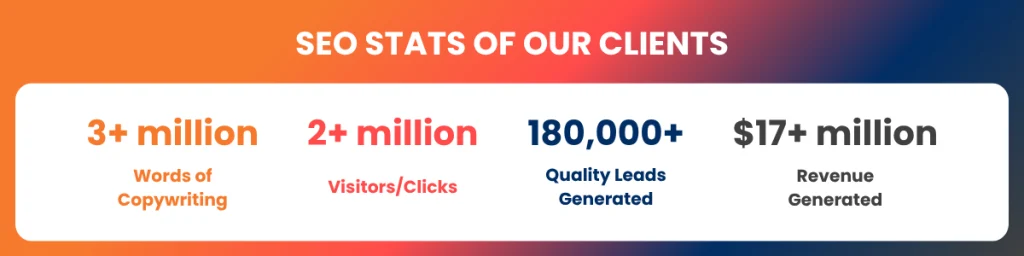
Why Stuff Sucks® provides SEO consulting specifically built for companies that want to be found by better candidates, faster. We optimize careers pages, job listing structure, and employer brand content from the ground up. Reach out through our website, or call 920-538-5833 to talk through your hiring visibility strategy.


Employee Referrals & Your Professional Network: Still the Best Channel You’re Underusing

Some of the best hires don’t come from job boards. They come from someone already on the team saying, “I know exactly who you should talk to.”
The data backs this up consistently. The Society for Human Resource Management (SHRM) reports that referred hires have a two-year retention rate of nearly 45%, compared to 20% for job board hires. Referred candidates get hired faster, onboard more smoothly, and stay longer because they walked in with a realistic picture of what the job actually is.
Setting up a formal employee referral program doesn’t require an HR department. Define what you’re looking for, offer a structured bonus (typically $200 to $500 for hourly roles, higher for skilled positions) paid at the 90-day mark. Ask current employees to share job postings on their personal social media platforms. LinkedIn’s algorithm gives employee shares meaningful reach, extending visibility to a second-degree network at zero additional cost.
Beyond the internal team, the professional network is an underused asset. Former colleagues, vendors, clients, and industry contacts all know people. A direct message asking if someone knows a good fit for a specific role will outperform a cold job posting almost every time. Make your referral program visible on your careers page with keyword-rich language so it surfaces in both internal and external searches.
Is Your GEO “Expert” The Fool’s Gold Of The AI Frontier?
AEO or GEO, Answer/AI/Generation Engine Optimization,” is the new frontier of online marketing strategies and just like prospecting in the 1800’s, you can never know if you’re rich until you actually strike gold. For this reason, if you’re looking to bring on a strategist to run an AI marketing strategy, it’s important to make sure they’re honest about what they know and what it’s even possible to know this early in the game. AI as a technology known by the masses has existed for a few years. To compare, how much did we really know about Google back in 2000? Not a lot, and even nearly thirty years later Google and other traditional search engines are continuing to evolve year after year, or sometimes month after month. The smartest minds in the SEO field are working continuously to decode the traits that AI engines are scanning for and while progress is made every day, anyone that claims to understand the whole system isn’t telling the whole story. Before you put your visibility in an “expert’s” hands, make sure they’ve got the experience to back up their promises. For one of our clients, a commercial tent manufacturer, AI search increased:- Sessions are up 150% YTD vs previous YTD.
- Have 42% visibility in AI searches vs several competitors at 33% & 25% for important topics
How Social Media Builds Your Employer Brand & Your Talent Pipeline
Social media is where an employer brand either earns trust or loses it. Job seekers research companies before applying. They check LinkedIn pages, scroll Instagram, read Glassdoor reviews, and look for any signal about what it’s actually like to work there. What they find shapes whether they hit apply or keep scrolling.
- LinkedIn remains the most important platform for professional hiring.
A well-maintained company page with consistent content (team milestones, culture moments, employee spotlights, industry commentary) builds visibility with passive candidates who aren’t actively job hunting but would consider the right opportunity. Optimizing the company page with relevant keywords also improves how it surfaces in LinkedIn search and Google.
- Facebook is the dominant platform for hourly and local hiring.
Facebook Jobs has a lower-friction application process than most job boards, which increases volume. Local community groups and industry-specific Facebook communities extend reach to candidates who aren’t active on LinkedIn at all.
- Instagram and TikTok are increasingly relevant for employer branding in retail, hospitality, creative, and consumer-facing industries.
Short-form video content showing real team moments, behind-the-scenes clips, and day-in-the-life posts creates authentic company culture signal in a format candidates trust more than polished marketing copy.
The SEO dimension here is real. Social media content that includes your company name, location, industry terms, and job-related language contributes to your overall digital footprint. The more consistently those signals appear across platforms, the more credible your employer brand looks to both candidates and search engines.
15 Hiring Techniques That Give You a Competitive Edge

Here are 15 specific tactics drawn from high-performing recruitment strategies that companies can act on immediately:
- Optimize job titles for search intent: Use phrases candidates type, not internal company language
- Build a keyword-rich careers page: Treat it like any other high-value SEO landing page
- Use niche job boards strategically: Targeted platforms outperform general boards for specific roles
- Run targeted social media hiring campaigns: Paid ads reach passive candidates who are open to a move
- Write job descriptions like a marketer: Lead with what candidates care about: growth, impact, culture
- Create video job ads: Short videos showcasing the team and work environment outperform text-only listings
- Launch a structured referral program: Current employees are your most credible recruiters
- Host virtual open houses or hiring events: Real-time interaction accelerates trust-building with potential candidates
- Make job listings crawlable: Structured data markup helps Google for Jobs surface your openings
- Use AI-powered screening tools: Platforms like Workable and Greenhouse filter applicants and flag strong matches automatically
- Track source-of-hire data: Know which channels produce your best hires and allocate budget accordingly
- Re-engage silver-medalist candidates: Past finalists who weren’t hired are warm, pre-vetted leads
- Respond to every employer review: Glassdoor and Indeed review responses signal that leadership is engaged and listening
- Implement chatbot pre-screening: Automated screening questions reduce time-to-interview without sacrificing candidate experience
- Collect post-interview feedback from candidates: Use it to identify friction points and improve conversion
Even implementing five or six of these consistently will put the hiring process ahead of most competitors. Paired with a strong SEO foundation, these tactics produce compounding results over time.
13 Traits That Separate Good Candidates from Great Ones
Knowing where to find candidates is half the equation. Knowing what to look for once they apply is the other half.
These 13 traits consistently distinguish top performers from average hires, and building them into job descriptions helps attract the right people from the start:
- Problem-solving ability: Can they navigate ambiguity without a playbook?
- Adaptability: Do they adjust quickly when priorities shift?
- Emotional intelligence: Can they read situations, manage relationships, and communicate across styles?
- Clarity of communication: Can they explain complex ideas simply?
- Coachability: Are they open to feedback and able to act on it?
- Initiative: Do they start things without being asked?
- Alignment with core values: Do they naturally live what the company culture stands for?
- Long-term mindset: Are they thinking beyond the next role?
- Attention to detail: Do they catch what others miss?
- Curiosity: Are they genuinely interested in learning and improving?
- Reliability: Can they be counted on to follow through, consistently?
- Collaboration style: How do they function as part of a team, not just as an individual contributor?
- Results orientation: Do they focus on outcomes, not just activity?
Writing these traits into job descriptions using natural, searchable language also improves SEO relevance. The more precisely a listing reflects what both the company needs and what strong candidates search for, the better it performs on both fronts.
The Companies Winning on Talent Are Winning on Search First

The best recruitment strategy and the best SEO strategy share the same foundation: be findable, be credible, and give people a clear reason to choose you over the competition.
Companies that invest in optimizing their careers pages, structuring their job listings for search, and building a consistent employer brand online not only attract more candidates, but also better ones. High employee turnover costs an average of 33% of a worker’s annual salary to replace, according to the Work Institute. The ROI on getting the hiring funnel right is significant.
Why Stuff Sucks® helps mid-to-large businesses build the kind of digital hiring presence that brings quality candidates in the door consistently. If the current approach isn’t producing the caliber of applicants the role demands, the problem usually isn’t the market. It’s the visibility.
Let’s fix that.
Contact us here or call 920-538-5833 to start the conversation.