
Most businesses treat regional SEO as an afterthought, bolting on a city name to an existing page and calling it a strategy.
That approach doesn’t work.
Search engines are sophisticated enough to reward businesses that demonstrate genuine regional relevance, and punish those that fake it with thin, duplicated content.
A real regional SEO strategy is built on precision targeting, location-specific content, and a deep understanding of how local customers search in each market you serve. The businesses winning regional search results right now aren’t spending more, they’re spending smarter.
In this guide, you’ll learn:
- The difference between local and regional SEO, and why it changes your entire approach
- How to build location pages that actually convert nearby customers
- Elite keyword targeting strategies your competitors haven’t found yet
- How local directories and publications compound your regional authority over time
We’ve expanded the reach of all kinds of organizations from firms and we’ll do the same for you. Let’s dive in…
Why Local SEO & Regional SEO Aren’t the Same Thing (+ Why It Matters)
Local SEO and regional SEO are often used interchangeably, but treating them as the same strategy is one of the most common and costly mistakes businesses make.
Local SEO zeroes in on a single city or immediate service area, optimizing primarily for Google Maps, a Google Business Profile, and hyper-local search queries like “coffee shop near me.” It’s designed for businesses that serve customers within a tight radius from one physical location.
Regional SEO operates at a larger scale. It’s the practice of optimizing your online visibility across multiple cities, counties, or geographic territories simultaneously.
Rather than depending solely on a single Google Business Profile, regional SEO relies on location-specific landing pages, regionally relevant content, and a coordinated link building strategy that builds authority across an entire market. A regional company serving six cities needs six distinct search presences, not one page with six city names stuffed into it.
The stakes are real. Nearly half of all Google searches have local intent, and businesses that align their SEO strategy to match regional search behavior consistently outperform competitors that treat every market the same. If your business serves customers across multiple cities or regions, a local SEO strategy alone will leave significant traffic and revenue on the table.
7 Strategies To Build Location Pages That Actually Convert Your Target Audience into Local Customers

Location pages are the foundation of any effective regional SEO strategy, but most businesses build them wrong. A page that simply swaps out a city name on a template is not a location page, it is a liability that search engines will ignore and customers will abandon.
Here are seven strategies to build location pages that earn rankings and drive real conversions:
- Create Unique Content for Each Location
Generic templates with swapped city names are a fast track to thin content penalties. For multilocation businesses, each location page needs original copy that speaks directly to the needs, language, and context of customers in that specific area, referencing local landmarks, regional challenges, and community-specific details that prove your presence is real.
- Embed Interactive Maps
Embedding a Google Maps widget tied to your specific service area or physical location gives search engines a strong geographic signal while making it easier for nearby customers to find and trust you. Interactive maps also reduce friction in the customer journey, turning a page visit into a direction request or phone call far more reliably than text alone.
- Feature Local Testimonials
Reviews and testimonials from customers in that specific region carry more conversion weight than generic five-star ratings. For example, when a prospect in Milwaukee reads a review from another Milwaukee customer describing a problem they recognize, the trust factor multiplies instantly.
- Optimize for “Near Me” Searches
“Near me” queries have exploded in search volume and represent some of the highest purchase-intent searches online. Incorporating schema markup, accurate NAP data, and location-specific meta tags signals to search engines that your page is the right answer for users searching in that geographic area.
- Add Location-Specific FAQs
FAQs tailored to regional pain points, local regulations, or market-specific concerns demonstrate expertise and relevance to both users and search algorithms. This content also positions your location pages to capture featured snippet placements and “People Also Ask” results for regional search queries.
- Include Visual Proof
Photos of your actual team, office, completed projects, or community involvement in that specific location build authenticity that stock imagery simply cannot replicate. Search engines increasingly reward pages that demonstrate E-E-A-T signals, and locally grounded visual content is one of the strongest ways to deliver it.
- Build Strategic Internal Links
Each location page should connect logically to your core service pages, related blog content, and other nearby location pages through thoughtful internal linking. This not only passes SEO authority across your site architecture but guides local customers through a clear path toward conversion.
Geographic vs Demographic: Find The Local SEO Strategy That’ll Boost Your Business
Before building your regional SEO strategy, you need to decide how you define your target region. The two most effective approaches are geographic targeting, which draws boundaries around physical areas, and demographic targeting, which draws boundaries around specific customer profiles.
Neither approach is universally superior, and the right choice depends entirely on your business model, service delivery, and customer base.
|
Benefit |
Geographic |
Demographic |
|
Targeting Precision |
Focuses on physical boundaries like cities, counties, zip codes, or regions |
Targets specific customer segments based on income, age, education, lifestyle |
|
Best For |
Businesses with service radius limits (contractors, HVAC, delivery services) |
Businesses serving niche markets regardless of exact location (luxury goods, college services) |
|
Keyword Approach |
“Plumber in [City]”, “[Service] near me”, “[Region] + [product]” |
“[Demographic] + [service]”, “affordable [product]”, “luxury [service]” |
|
Content Strategy |
Neighborhood guides, local landmarks, city-specific pages, regional events |
Lifestyle content, income-appropriate messaging, age-relevant topics |
|
Conversion Intent |
High: users need immediate local service or product |
Medium to High: users seek value alignment with their identity |
|
Competition Level |
Often saturated in major metro areas |
Less crowded, more opportunity in underserved niches |
|
Google Business Profile Impact |
Critical: drives map pack visibility and foot traffic |
Supportive: helps with discovery but less central to strategy |
|
Scalability |
Scales by adding new locations or expanding service radius |
Scales by refining personas and adding demographic segments |
|
Measurement Focus |
Local rankings, map visibility, phone calls, directions requests |
Engagement metrics, on-site time, conversion rates by audience segment |
|
Budget Requirements |
Can be cost-effective for single locations; scales with geography |
Requires deeper audience research and segmentation tools upfront |
|
Speed to Results |
Faster in smaller markets; slower in competitive metros |
Slower initially due to targeting refinement; faster once dialed in |
|
Long-Term Value |
High if you dominate a specific territory |
Very high if you own a demographic niche across multiple areas |
*Note: if your geographic focus extends beyond one specific region, you may need a more robust strategy in order to capture country-wide and global attention. To explore more about how to implement large-scale strategies, check out these resources:
- Professional National SEO Services To Score Nationwide Gains
- Grow Global Reach with a Proven International SEO Expert
Stop Guessing With Your Marketing Strategy & Partner With Regional SEO Experts
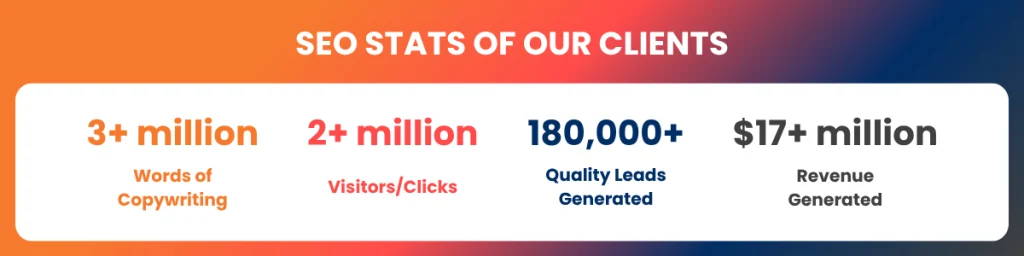
Building a regional SEO strategy that performs across multiple markets requires more than good intentions and a few location pages. It demands a coordinated system of keyword research, content creation, technical optimization, and link building executed consistently across every market you serve. Most businesses don’t have the internal bandwidth to do all of it well, and that gap is exactly where competitors gain ground.
Our team has spent years helping regional companies build search visibility that compounds over time and converts local customers at every stage of the funnel. Contact us today to build a strategy tailored to your markets where your regional SEO efforts stand right now.




Google Keyword Planner Won’t Tell You This: Learn 8 Elite Regional Keyword Targeting Strategies

Google Keyword Planner is a useful starting point, but it shows you the same data your competitors are already looking at. Building a regional SEO strategy that outranks established players requires going deeper, finding keyword opportunities that tools surface only to those who know where to look.
These eight strategies will uncover the relevant local keywords your competitors haven’t claimed yet:
- Mine Competitor Location Pages for Hidden Keyword Opportunities
Pull your top regional competitors’ location pages through tools like Ahrefs or SEMrush and analyze exactly which keywords are driving their traffic. The gaps between what they rank for and what you rank for represent your fastest path to regional search engine rankings.
- Use Search Console Data to Find Regional Long-Tail Variations
Google Search Console reveals the actual queries real users typed before landing on your pages, including location-specific variations you would never think to target manually. Filter by geographic performance data to identify which regional keywords are already driving impressions and need a push to reach page one.
- Analyze “People Also Ask” for Location-Specific Question Keywords
The People Also Ask boxes that appear in local search results are a goldmine of question-based regional keywords that map directly to FAQ content and location page copy. These queries often carry lower competition than head terms while attracting high-intent nearby customers ready to make a decision.
- Target Neighborhood & Landmark-Based Search Queries
Searchers in your target market use local landmarks, neighborhood names, and community-specific references as natural search modifiers, and most regional SEO strategies completely ignore this behavior. Incorporating these hyper-local references into your content signals genuine regional relevance to search engine algorithms.
- Leverage Regional Dialect & Colloquialisms in Keyword Selection
What customers in one city call a service is sometimes entirely different from what customers two hours away call the same thing. Researching regional language patterns and incorporating local terminology into your keyword strategy captures search demand that standardized keyword research tools systematically miss.
- Identify Seasonal & Event-Driven Regional Keywords
Every region has seasonal demand spikes tied to weather, local events, sports seasons, and cultural moments that create predictable surges in relevant search volume. Building content around these windows in advance positions your regional pages to capture high-intent traffic before competitors even recognize the opportunity.
- Combine Service + Intent + Location for Triple-Threat Keywords
The most powerful regional keywords layer together a specific service, a clear buyer intent signal, and a location modifier into a single targeted phrase. This combination dramatically narrows competition while dramatically increasing the conversion rate of the traffic those keywords deliver.
- Track Local Search Volume Trends Across Multiple Tools
Relying on a single free tool like Google Keyword Planner for search volume data leaves too much to chance when building a multi-market SEO strategy. Cross-referencing data across Ahrefs, SEMrush, and Google Trends gives you a more accurate picture of regional search demand and helps you prioritize which markets to target first.
Will GEO Replace SEO? (Hint: Maybe)
No, and anyone telling you that story is selling something. Google (and Bing) still processes billions of searches every single day, and most of those searches still end in a click. Traditional search remains alive and well, and it now shares the stage with a handful of new players.
Think about how you actually search. You still type things into Google (or Bing). You still click through results, compare options, and land on a website before making a decision. AI tools like ChatGPT and Perplexity have added a new layer to that process, they haven’t torn out the old one. The businesses winning right now aren’t choosing between AEO and SEO, they’re doing both at once.
For one of our clients, an enterprise cloud workspace security, AI search increased:
- AI traffic grew by 30% (MoM).
- 56% visibility in AI searches vs competitors at 32%, 26% & 25% for key topics they care about.
The technical work that earns you a spot in Google’s results, like fast load times, clean structure, and strong backlinks, is the same work that gets you cited by AI models. Pouring your entire budget into “AI optimization” while your traditional search foundation crumbles is a great way to lose visibility everywhere at once. The smart move is building both at the same time, because they were never actually in competition to begin with.
9 Ways Local Directories & Local Publications Build Your Regional Relevance
Local directories and regional publications are two of the most underutilized assets in a regional SEO strategy, yet they deliver compounding authority that paid ads simply cannot replicate. Getting your business listed accurately and consistently across these platforms sends trust signals to search engines while putting your brand directly in front of local customers who are already searching for what you offer.
- Establish NAP Consistency
Search engines cross-reference your business name, address, and phone number across dozens of local directories to verify that your business is legitimate. Inconsistent NAP data across platforms confuses search algorithms and suppresses your local rankings, making consistency one of the highest-leverage fixes in regional SEO.
- Earn Authority Backlinks
Local directories and regional publications frequently carry strong domain authority, and a listing or feature in these outlets translates directly into a quality backlink pointing to your site. These local backlinks are among the most contextually relevant signals you can earn for regional search engine rankings.
- Boost Local Pack Rankings
Google’s Local Pack, the map-based results that appear at the top of local searches, is heavily influenced by citation signals from directories like Yelp, Yellow Pages, and industry-specific platforms. A consistent, well-maintained presence across these platforms directly improves your chances of appearing in this high-visibility search placement.
- Increase Brand Visibility
Appearing across multiple local directories and regional publications creates multiple touchpoints where potential customers encounter your brand before they ever visit your website. This repeated exposure builds familiarity, and familiarity builds the kind of trust that converts first-time visitors into paying customers.
- Build Trust Signals
A business that appears consistently across review sites, local directories, and regional media outlets reads as a legitimate business to both search engines and searchers. These trust signals are especially critical in competitive regional markets where customers have multiple options and use online credibility as a deciding factor.
- Drive Referral Traffic
Beyond SEO value, active directory listings and local publication features send direct referral traffic from users who are already browsing those platforms for recommendations. This audience is pre-qualified, location-aware, and often ready to make a purchasing decision, making referral conversions from these sources consistently high.
- Strengthen Geographic Relevance
Every mention of your business name alongside a specific city, county, or region across authoritative local platforms reinforces your geographic relevance in search engine algorithms. The more consistently search engines see your business associated with a particular area, the more confidently they serve your pages to users searching in that region.
- Amplify Positive Online Reviews
Local directories and review platforms like Yelp, Google, and industry-specific sites give satisfied customers a trusted, high-visibility place to share their experiences with your business. A steady stream of positive reviews across these platforms strengthens your regional reputation while simultaneously sending engagement signals that search engines factor directly into local rankings.
- Capture Niche Industry Directory Traffic
Beyond general directories, industry-specific platforms attract audiences with precise purchase intent that broad directories simply cannot match. A contractor listed on Houzz, a restaurant featured on OpenTable, or a manufacturer listed on ThomasNet gains access to regionally targeted traffic that is already deep in the decision-making process and far more likely to convert into a customer.
Your Regional SEO Questions, Answered: 6 Tips from the Experts

Regional SEO raises questions that go beyond the basics, especially for businesses managing multiple markets, service areas, or location pages simultaneously. Here are the answers to the questions we hear most often from businesses serious about scaling their regional search presence.
- Should I Use Subdomains or Subdirectories for Location Pages?
Subdirectories are almost always the stronger choice for regional SEO because they consolidate domain authority and allow your location pages to benefit from the overall strength of your root domain. Subdomains are treated as separate sites by search engines, which means they build authority independently and require significantly more resources to rank competitively.
- How Do I Handle Regional SEO for Service Areas Without a Physical Office?
Businesses without a physical location in every market they serve should focus on creating robust, genuinely helpful location-specific landing pages rather than relying on a Google Business Profile address they don’t actually occupy. Combining strong on-page regional content with local backlinks, citations, and customer reviews from that area can build meaningful visibility even without a storefront.
- Can Duplicate Content Hurt My Regional SEO Rankings?
Duplicating content across location pages is one of the fastest ways to undermine an otherwise solid regional SEO strategy. Search engines identify near-identical pages and typically choose only one to rank, effectively making your other location pages invisible regardless of how well optimized their meta tags and keywords are.
- What Role Do Local Citations Play in Multi-City SEO?
Local citations are mentions of your business information across directories, review platforms, and local websites, and they serve as verification signals that confirm your business operates in a specific geographic area. In a multi-city strategy, maintaining accurate citations for each location independently is essential because citation inconsistencies at the location level suppress rankings at the market level.
- How Often Should I Update Regional Content?
Regional content should be reviewed and refreshed at minimum every six months, with updates triggered sooner by significant local events, market changes, or shifts in regional search trends. Search engines reward content that stays current and relevant, and outdated regional pages gradually lose rankings to competitors who maintain fresher, more accurate information.
- What’s the Best Way to Track Regional Keyword Performance?
The most effective approach combines Google Search Console’s geographic performance filters with a rank tracking tool like SEMrush or Ahrefs that allows you to monitor keyword positions at the city or regional level. Tracking performance separately for each target market lets you identify which locations are gaining ground, which need attention, and where your regional SEO efforts are delivering the strongest return.
Transform Nearby Customers into Brand Visibility Champions with Regional Targeting

A regional SEO strategy that works doesn’t happen by accident. It’s built methodically, market by market, page by page, keyword by keyword, and the businesses that commit to that process are the ones that own their local search results for years while competitors scramble to catch up. The tactics in this guide give you the framework to start building that advantage today.
Search engines reward relevance and consistency above all else, and a well-executed regional strategy delivers both at scale. Every location page you optimize, every local directory you claim, and every region-specific keyword you target compounds into a search presence that becomes harder for competitors to displace over time.
Contact our team to get a customized regional SEO strategy built around your specific markets, business goals, and competitive landscape.