
Content marketing SEO services are the practice of creating, optimizing, and distributing high-quality content that:
- Ranks in search engines
- Earns citations in AI-powered search tools
- Converts organic traffic into qualified leads
For businesses serious about digital growth, content marketing and SEO are not separate disciplines. They are the same discipline executed well.
Here is why that distinction matters: According to research from Demand Metric, content marketing generates three times as many leads as outbound marketing while costing 62% less. Companies that publish consistent, optimized content see compounding organic traffic growth that paid search simply cannot replicate at the same cost. Every blog post, landing page, and resource guide that ranks in Google is a 24/7 lead generation asset that keeps working long after it was published.
This guide covers the full picture of content marketing SEO services:
- What they include
- Why most content strategies fail
- Which formats drive real results
- How keyword research actually works
- What it takes to build a content program that produces measurable business outcomes rather than vanity metrics
The Fast-Track Breakdown of Content Marketing SEO Services
The best content marketing SEO services combine search optimization with strategic content creation to build organic visibility, attract a target audience, and convert website visitors into paying customers. Here is what a complete content marketing program includes:
|
Service Component |
What It Does |
Business Outcome |
|
Content strategy |
Defines topics, formats, cadence, and goals aligned to business objectives |
Ensures every piece of content serves a purpose |
|
Keyword research |
Identifies the terms and questions your target audience is actively searching |
Targets content toward high-intent, relevant keywords |
|
Content creation |
Produces blog posts, landing pages, guides, and other formats written by professional writers |
Builds organic search presence across the funnel |
|
On-page SEO optimization |
Optimizes title tags, meta descriptions, headers, internal links, and structured data |
Improves search engine rankings for individual pages |
|
Evaluates existing website content for gaps, thin pages, and optimization opportunities |
Recovers ranking potential from underperforming content |
|
|
Link building |
Earns backlinks from credible sites through content-driven outreach and digital PR |
Builds domain authority that lifts rankings across the site |
|
Content distribution |
Promotes content across email marketing, social media platforms, and digital marketing channels |
Extends reach beyond organic search alone |
|
Structures content for citation in ChatGPT, Perplexity, and Google AI Overviews |
Builds visibility in generative search environments |
|
|
Performance tracking |
Measures organic traffic, lead generation, conversion rates, and content ROI |
Connects content output to actual business growth |
A content marketing agency that treats any of these components as optional is delivering an incomplete program. All nine work together.
Remove one, and the system underperforms.
6 Reasons Most Content Marketing Fails Before It Ever Gets Read

Most companies that invest in content marketing and see little return are not making one big mistake. They are making several smaller ones that compound quietly over time. Here are the most common reasons content marketing fails to produce results:
- It was never built around a real content strategy.
Publishing blog posts without a documented content strategy is the single most common failure mode. Without a strategy that aligns topics, formats, and publishing cadence to specific business goals, content becomes a collection of disconnected articles rather than a system that builds authority and drives conversions.
- The keyword research was done once and never revisited.
Search behavior changes. Competitors enter and exit the rankings. New questions emerge as markets evolve. A keyword strategy that was accurate 18 months ago may be targeting terms that no longer reflect how your target audience searches today. Keyword research is an ongoing input, not a one-time deliverable.
- The content is too vague to rank or convert.
Generic content that could have been written by anyone about anything for anyone performs poorly in both traditional search engines and AI-powered search. Search engines reward specificity, depth, and entity richness. AI citation systems like ChatGPT and Google AI Overviews specifically prioritize content that contains definitive claims, named sources, and concrete data. Vague, hedging copy earns neither rankings nor citations.
- There is no distribution plan.
Creating content without distributing it is the digital equivalent of putting a billboard in a warehouse. High-quality content needs a promotion strategy that includes email marketing to existing customers, social media amplification, internal linking from high-traffic pages, and in many cases earned backlinks from credible sites.
- The content calendar exists but has no accountability.
A content calendar that no one enforces is a wishlist. Consistent publishing cadence is one of the strongest signals a website can send to search engines that a brand is active, authoritative, and worth ranking. Companies that publish sporadically see sporadic results.
- Success is measured by traffic instead of leads.
Organic traffic that does not convert into qualified leads is not a business asset. It is a vanity metric. Content marketing that is genuinely aligned with business objectives tracks qualified leads, pipeline contribution, and revenue influenced, not just page views and impressions.
7 Content Formats That Drive Organic Traffic & Actually Convert
Not all content formats perform equally across the funnel. The best content marketing strategies deploy multiple formats strategically, matching the format to the intent of the searcher and the stage of the buying journey they are in.
- Long-form blog posts and guides
Comprehensive articles of 1,500 words or more consistently outperform shorter content in organic search rankings. They give search engines more signal about topical authority and give readers more reason to stay on the page. According to Curata research, long-form content generates nine times more leads than short-form content.
- Service and landing pages optimized for high-intent keywords
These are the revenue-driving pages of any content marketing program. A landing page built around a high-intent keyword like “content marketing agency for B2B companies” targets a searcher who is actively evaluating vendors, not just researching a topic.
- Pillar pages and topic clusters
A pillar page covers a broad topic comprehensively and links out to supporting articles that address subtopics in depth. This internal linking structure signals topical authority to search engines and keeps readers moving through related content, increasing both time on site and conversion opportunity.
- Case studies and success stories
Case studies convert at a higher rate than almost any other content format because they replace abstract claims with specific, verifiable evidence. A case study that names a client, describes the challenge, and quantifies the result is also a strong AI citation target because of its entity richness and factual specificity.
- FAQ content and question-based articles
Content built around the exact questions your target audience types into search engines captures featured snippet positions and earns citations in AI-generated answers. Questions like “how much do content marketing services cost” or “what is the difference between content marketing and SEO” target searchers in the consideration phase who are close to making a purchasing decision.
- Lead magnets and gated resources
Ebooks, templates, checklists, and downloadable guides convert organic traffic into known leads by offering something valuable in exchange for contact information. When promoted through well-optimized landing pages, lead magnets extend the ROI of content marketing beyond organic rankings into active lead generation.
- Email drip campaigns tied to content topics
Email marketing is the distribution channel that activates the audience content marketing has already built. Drip campaigns that deliver relevant content to segmented subscriber lists nurture existing customers and potential customers simultaneously, shortening sales cycles and improving conversion rates from organic traffic.
6 Keyword Research Mistakes That Are Killing Your Content Strategy

Keyword research is where content marketing strategy either gets built on solid ground or starts to crack. These are the six mistakes that most consistently undermine content performance before a single word gets written:
- Targeting high-volume keywords without considering intent.
A keyword that gets 10,000 searches a month from people looking for free information is not the same as a keyword that gets 500 searches a month from people ready to hire a vendor. Search intent determines conversion potential. An effective content strategy prioritizes keywords where the intent matches the business goal, not just the traffic ceiling.
- Ignoring long-tail keyword variants.
Short, competitive keywords like “content marketing” are difficult to rank for and often attract broad, unqualified traffic. Long-tail variants like “content marketing services for B2B technology companies” have lower search volume but significantly higher conversion rates because they reflect specific, high-intent queries from a well-defined target audience.
- Failing to analyze what already ranks.
Before creating content for a target keyword, understanding what currently occupies the top positions in search results is essential. If the first page is dominated by listicles, a comprehensive guide may not rank. If it is dominated by vendor pages, a blog post may not compete. Keyword research without competitive analysis is incomplete.
- Not mapping keywords to specific pages.
Every target keyword should be assigned to a specific page on the website. When multiple pages target the same keyword, they compete against each other and dilute ranking potential. Keyword mapping prevents cannibalization and ensures the site’s content architecture is working for the SEO strategy rather than against it.
- Overlooking question-based and conversational keywords.
The rise of AI-powered search has made question-based keywords more valuable than ever. Tools like ChatGPT, Perplexity, and Google AI Overviews frequently pull answers from content that directly addresses natural language questions. Content built around questions your target audience is asking captures both traditional search rankings and AI citation visibility simultaneously.
- Treating keyword research as a one-time project.
Search behavior evolves continuously. New competitors enter the market. Google updates its algorithm. Audience language shifts. A keyword strategy that was accurate at program launch needs to be revisited quarterly to stay aligned with how the target audience is actually searching today.
What a Smart Content Calendar Looks Like in Practice (The 5 Pillars)
A content calendar is not a spreadsheet with publish dates. It is the operational infrastructure of a content marketing program. When built correctly, it connects every piece of content to a specific keyword, a stage in the buyer journey, a target audience segment, and a measurable business objective.
Here is what a functional content calendar includes for every planned piece of content:
- Target keyword and search intent
Every piece of content starts with a keyword and a clear understanding of what the searcher behind that keyword actually wants. Is this an informational query, a commercial investigation, or a transactional search? The content format, depth, and CTA all follow from that answer.
- Content format and word count target
Different keywords and different funnel stages call for different formats. A high-intent service keyword calls for a landing page with a strong conversion architecture. An educational query calls for a long-form guide. A comparison query calls for a structured breakdown that addresses the decision a potential customer is trying to make.
- Publishing date and content owner
A calendar without assigned ownership is a suggestion, not a plan. Every piece of content needs a clear owner responsible for delivery, whether that is an internal content team, a content marketing agency, or professional writers under a managed program.
- Distribution plan
How will this piece of content reach its audience beyond organic search? Which email segments will receive it? Which social media platforms will it be shared on? Are there internal pages that should link to it on publish date? Distribution planning at the calendar stage prevents content from being published and forgotten.
- Performance tracking setup
Every piece of content should have tracking configured before it goes live. What does success look like for this specific URL? Organic rankings for the target keyword, qualified leads from the page, time on page, and conversion rate from organic traffic are all more meaningful measurements than raw page views.
When a content calendar operates at this level of specificity, content marketing stops being a creative exercise and becomes a predictable system for business growth.
Tired of Content That Gets Traffic But No Leads?
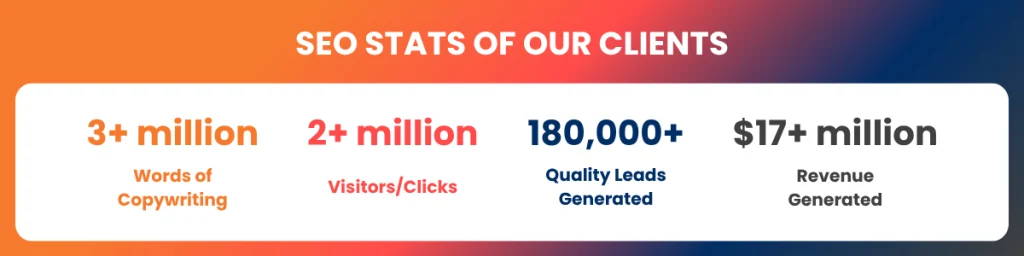
Why Stuff Sucks® builds content marketing SEO programs that are designed from the first keyword to the final CTA around one goal: qualified leads. If the current content strategy is generating impressions with no regard to the pipeline… that is a strategy problem, not a content problem.
Get in touch or call 920-538-5833 to talk about what a results-driven content program looks like for your business.
5 On-Page SEO Elements Every Piece of Content Needs to Rank

On-page SEO is the set of optimizations applied directly to individual web pages to improve their visibility in search engine results. These five elements determine whether a piece of content has a realistic shot at ranking for its target keyword.
- Title tag with the primary keyword near the front.
The title tag is the most heavily weighted on-page SEO element. A title tag that leads with the target keyword, stays under 60 characters, and gives the reader a clear reason to click outperforms a generic or clever title in both search rankings and click-through rate from search engine results pages.
- Meta description that earns the click.
Meta descriptions do not directly affect rankings, but they directly affect whether a searcher chooses your result over the one above or below it. A strong meta description for a content marketing services page names the service, states a specific benefit, and includes a clear call to action, all in under 160 characters.
- Header structure that mirrors search intent.
H1, H2, and H3 tags organize content for both search engines and readers. The H1 should contain the primary keyword. H2s should address the major subtopics a searcher expects to find in this type of content. A well-structured header hierarchy also makes individual sections eligible for AI citation and featured snippet consideration.
- Internal links that connect related content.
Every piece of content should link to at least two or three related pages on the same website. Internal links distribute authority from high-performing pages to newer or lower-authority pages, help search engines understand topical relationships, and keep readers moving through the site toward conversion.
- Optimized content with natural keyword integration.
Relevant keywords should appear in the introduction, at least one H2, and throughout the body copy at a density that reads naturally. Keyword stuffing, the practice of forcing a target keyword into the copy at an unnatural frequency, is a search engine penalty risk and makes content worse for the reader simultaneously.
How Content Marketing & Link Building Work Together to Build Authority
Content marketing and link building are the two most powerful authority-building channels in SEO, and they work best when they are treated as a single integrated strategy rather than separate workstreams.
Here is the relationship: search engines use backlinks from credible sites as a primary signal of domain authority. A website with strong domain authority ranks more easily for competitive keywords than one without it. But earning high-quality backlinks requires having something worth linking to.
That is where content marketing comes in.
The types of content that earn the most valuable backlinks include original research and data, comprehensive guides that become the definitive resource on a topic, tools and calculators that serve a specific audience need, and thought leadership content that takes a clear, well-supported position on an industry question.
These are not accidental link magnets. They are built intentionally to be citable, shareable, and authoritative.
Guest blogging on credible sites in the industry extends this further. A contributed article on a respected publication earns a backlink from a high-authority domain while putting the brand in front of a new, relevant audience. The content that earns those placements is the same content that signals authority to AI search systems:
- Specific
- Data-backed
- Entity-rich
- Written at a level that reflects genuine expertise
The compounding effect is significant: strong content earns backlinks. Backlinks build domain authority. Higher domain authority improves rankings for new content published on the site. Each new piece of authoritative content creates additional link opportunities.
Over time, this cycle produces a content program that grows in value rather than requiring constant reinvestment to maintain its position.
Is Your Content Optimized for AI Search?

AI-powered search tools are changing how potential customers find and evaluate businesses. ChatGPT, Perplexity, Google AI Overviews, and other generative search platforms are increasingly the first stop for buyers researching solutions, comparing vendors, and looking for recommendations. For businesses investing in content marketing SEO services, visibility in these systems is now as important as visibility in traditional search results.
What makes content visible in AI-generated answers? Research from Kevin Indig’s Growth Memo, based on analysis of over 1.2 million ChatGPT citations, identified five characteristics that consistently appear in content AI systems choose to cite:
- Definitive language
Content that uses declarative statements like “content marketing SEO services are defined as” or “the three components of a content strategy are” is cited at nearly twice the rate of content that hedges with phrases like “it could be argued” or “some experts suggest.” AI systems prefer content that resolves a query directly rather than circling around it.
- Entity richness
Heavily cited content contains specific named entities including brands, tools, people, statistics, and organizations at a density roughly four times higher than average English text. Content that says “top tools include Ahrefs, SEMrush, and Google Search Console” is more citable than content that says “there are many useful tools available.”
- Conversational question-and-answer structure
Content that poses a question and answers it directly mirrors the way users prompt AI systems. Pages built around the questions a target audience is actually asking are structurally well-suited for AI citation.
- Balanced analytical voice
AI systems favor content with a subjectivity score around 0.47, the analytical voice of a credible expert who combines facts with interpretation. Pure data dumps and pure opinion pieces both underperform. Content that states a fact and then explains what it means hits the target.
- Front-loaded key claims
44.2% of all AI citations come from the first 30% of a page. The most citable content leads with its most important claims, data points, and definitions rather than building to them gradually. For businesses that want AI search visibility, the introduction is the most valuable real estate on the page.
Optimizing for AI search is not a separate content strategy from optimizing for traditional search engines. The same content that ranks well in Google, deep topical coverage, specific entities, clear structure, and authoritative voice, is the content that earns citations in AI-generated answers.
Building for both simultaneously is what a complete content marketing SEO program looks like today.
8 Metrics That Actually Tell You If Your Content Marketing Is Working

Most content marketing reports are full of numbers that feel meaningful but do not connect to business outcomes. These eight metrics cut through the noise and tell you whether the content program is genuinely producing results:
- Organic traffic from non-branded keywords
Total organic traffic includes visitors who searched for the brand name directly, which is not a content marketing win. Non-branded organic traffic, visitors who found the site by searching for a topic or problem rather than the company name, is the metric that reflects actual content performance.
- Keyword rankings for target terms
Tracking the search engine rankings of specific target keywords over time shows whether the content strategy is gaining traction. Rankings that improve month over month indicate the program is working. Stagnant or declining rankings signal that something in the strategy or execution needs adjustment.
- Qualified leads from organic content
This is the most important content marketing metric for businesses with a sales process. How many of the leads entering the pipeline can be attributed to organic content? Tracking UTM parameters, form submissions from blog and landing page traffic, and first-touch attribution from content sources connects content output directly to revenue pipeline.
- Conversion rate by content page
Not all organic traffic converts at the same rate. Identifying which pages convert visitors into leads at the highest rate reveals what is working and informs future content creation. A blog post with strong traffic but zero conversions is underperforming. A blog post with moderate traffic and a 3% lead conversion rate is a revenue asset.
- Backlinks earned from new referring domains
The number of unique domains linking to the website over time is a leading indicator of authority growth. A content program that consistently earns backlinks from new credible sites is building the domain authority that makes future content easier to rank.
- Pages indexed and crawled by search engines
A growing content library that is not being indexed is not contributing to organic visibility. Monitoring crawl coverage in Google Search Console ensures that content investment is actually visible to search engines.
- AI citation visibility
Tracking how frequently the brand and its content are cited in AI-generated answers from ChatGPT, Perplexity, and Google AI Overviews is an emerging but increasingly important metric. Tools that monitor brand mentions across LLM outputs are becoming standard in content marketing reporting.
- Revenue influenced by content
Multi-touch attribution that connects content interactions to closed deals is the gold standard of content marketing measurement. Even a simple last-touch attribution model that tracks how many customers interacted with organic content before converting provides significantly more business insight than traffic and impression data alone.
7 Answers Smart Marketers Want to Know About Content Marketing SEO
Content marketing SEO raises different questions depending on where a business is in its program maturity. These are the ones that reflect real strategic thinking rather than surface-level curiosity:
- Is content marketing SEO still worth investing in now that AI is changing search?
More than ever. AI-powered search tools like ChatGPT and Google AI Overviews pull their answers from authoritative web content. A business without a strong content library has nothing for these systems to cite. The brands that invest in deep, specific, well-structured content now are building the citation assets that will drive AI search visibility for years. The brands that stop investing in content because “AI is changing everything” will simply become invisible in the new search environment faster.
- How is content marketing SEO different from just hiring a copywriter?
A copywriter produces words. A content marketing SEO program produces a system. The difference is keyword strategy, search intent alignment, on-page optimization, internal linking architecture, content distribution, and performance tracking. A skilled copywriter working without those inputs will produce content that reads well but does not rank, does not earn backlinks, and does not convert organic traffic into qualified leads.
- How much content does a business actually need to publish to see results?
Quality and strategic alignment matter more than volume. A business publishing two well-researched, properly optimized, strategically targeted articles per month will consistently outperform one publishing eight shallow, poorly targeted pieces. That said, a minimum publishing cadence of two to four pieces of substantive content per month is generally necessary to build enough topical footprint to compete in most industries.
- Should content target the bottom of the funnel or the top?
Both, but most businesses underinvest in bottom-of-funnel content. Top-of-funnel content builds organic traffic and brand awareness. Bottom-of-funnel content (pages that directly address purchase decisions like comparisons, pricing guides, and use case breakdowns) converts that traffic into leads. A content strategy that only targets informational keywords generates traffic without leads. A balanced strategy generates both traffic and pipeline.
- What is the right relationship between content marketing and paid search ads?
They serve different functions and work best in combination. Paid search provides immediate visibility for high-intent keywords while organic content builds. Over time, as content earns rankings for target keywords, paid search budgets can be reduced on those terms and reallocated to harder-to-rank queries or new market segments. The companies that treat paid and organic as competing budget lines miss the compounding advantage of running both strategically.
- How long before content marketing produces measurable results?
Most programs begin showing meaningful organic ranking improvements within three to four months. Significant traffic and lead generation gains typically materialize between six and twelve months. The compounding nature of content marketing means the program becomes more valuable over time, not less. A piece of well-optimized content published today may generate its highest lead volume two years from now as it accumulates backlinks and ranking history.
- What separates a content marketing agency that drives results from one that just produces content?
Strategy, measurement, and accountability. An agency that delivers a content calendar and a monthly word count without connecting output to business objectives is a content production vendor. A content marketing agency that builds programs around target keywords mapped to business goals, tracks qualified leads from organic content, adjusts strategy based on performance data, and reports on revenue influenced rather than vanity metrics is an actual growth partner. The question to ask any content marketing company before signing is simple: how do you define success, and how do you measure it?
Is Your Content “Good Enough,” or Exceptional? Close the Gap to Be Remembered

Most websites have content. The question is whether that content is doing anything.
Ranking in search results, earning citations in AI-generated answers, converting organic visitors into qualified leads, and building the kind of topical authority that compounds over time all require more than a consistent publishing schedule and a basic keyword list.
Content marketing SEO services at the level that produces measurable business growth require keyword strategy, professional writers who understand search optimization, on-page technical execution, link building, AI search visibility planning, and rigorous performance measurement working together as a single system.
That is not a one-time project. It is an ongoing program that gets more valuable as it matures.
Why Stuff Sucks® builds content marketing programs for businesses that are serious about organic growth. If the current content strategy is not producing the qualified leads and search visibility the business is capable of generating, that gap is worth closing.
Contact us here or call 920-538-5833 to talk about what a results-driven content marketing SEO program looks like for your organization.